
How Fast Is a Peregrine Falcon?


A peregrine falcon travels at different speeds depending on what it is doing.
When simply cruising through the sky, it flies at around 25 to 34 miles per hour. When pursuing prey, it can reach speeds of up to 69 miles per hour. But its most impressive speed comes during a hunting dive.
When it folds its wings and dives toward its target, it can exceed 200 miles per hour. That is faster than a passenger jet plane during takeoff. This makes the peregrine falcon the fastest animal on Earth.
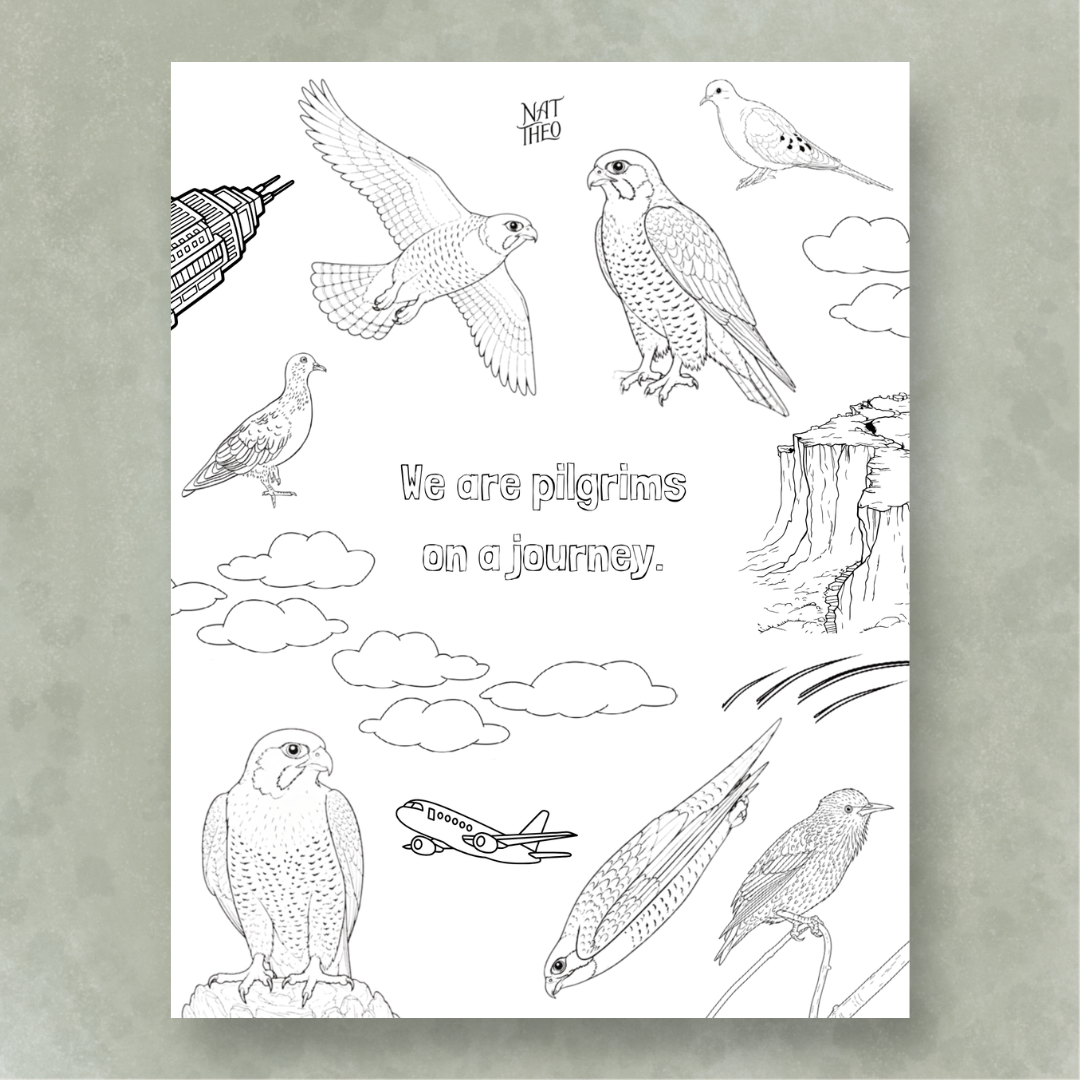
Peregrine Falcon Coloring Sheet
How Fast Is a Peregrine Falcon?
When people think of fast animals, they often picture a cheetah racing across the grasslands. While the cheetah is the fastest land animal, it is not the fastest animal on Earth. That title belongs to the peregrine falcon.
The peregrine falcon is famous for its incredible speed and remarkable hunting abilities. In fact, this bird can travel more than twice as fast as a cheetah when diving through the sky. God designed it with specialized features that make it one of the most impressive flyers in the world.
What Makes a Peregrine Falcon So Fast?
The peregrine falcon’s speed is not an accident. Its entire body is designed for powerful flight and rapid dives.
One important feature is its strong keel bone. The keel bone is a ridge on the breastbone where large flight muscles attach. These muscles provide the power needed for fast flight.
Two important muscle groups help the falcon fly:
- The pectoralis major muscles pull the wings downward during flight.
- The supracoracoideus muscles raise the wings back up.
Together, these muscles work like a pulley system, allowing the falcon to fly with tremendous strength and efficiency.
The peregrine’s body shape also contributes to its speed. Its streamlined, teardrop-shaped body, stiff feathers, and ability to tuck its wings and feet in make it highly aerodynamic during dives.
How Does a Peregrine Falcon Breathe During a Dive?
Traveling at more than 200 miles per hour creates a challenge. Air rushes toward the bird’s face at incredible speed.
God designed the peregrine falcon with a special structure inside its nostrils called a nasal tubercle. This small cone-shaped bump helps slow and manage the rushing air before it enters the lungs. Because of this design, the falcon can continue breathing during high-speed dives.
Engineers studied this feature when designing certain jet engines. The falcon’s nostril structure inspired ways to guide airflow more smoothly through aircraft engines.
How Are a Peregrine Falcon’s Eyes Protected?
Flying at extreme speeds can expose a bird’s eyes to dust, debris, and insects. To solve this problem, peregrine falcons have an extra eyelid called a nictitating membrane.
Unlike our eyelids, this membrane moves sideways across the eye. It works like a tiny windshield wiper, helping keep the eye clean, protected, and moist while still allowing the bird to see.
A Bird Built for Speed
From its powerful flight muscles and strong keel bone to its specialized nostrils and protective third eyelid, every part of the peregrine falcon works together to support its incredible speed. These designs allow it to soar, hunt, and dive faster than any other animal on Earth.
The next time you see a bird gliding through the sky, remember the peregrine falcon and the amazing ways it was designed for life in the air.
Learn more about peregrine falcons on our nature podcast for kids and families:
learn more
Raising kids stirs something deep in our souls — an innate knowing that our time is finite. Taking my kids outside in creation, I’m discovering how to stretch our time and pack it to the brim with meaning. God’s creativity provides the riches of resources for teaching the next generation who He is and how He loves us. Join our adventure and discover inspiration and resources for refusing rush, creating habits of rest, living intentionally, and making the most of this beautiful life!
I'm Eryn, Master Naturalist, Author, & Bible Teacher
Hey there!

Receive free inspirational resources for refusing rush, creating habits of rest, parenting with intentionality, and teaching our kids who God is through what He has made!
Inspired
Be


The Nature of Rest
What the Bible and Creation Teach Us About Sabbath Living
Now Available!
Order
X
Signed Copy
Add a Comment