
Why is a Peacock So Fancy?


The brilliant colors of a peacock come from a phenomenon called iridescence.
Iridescence is when something appears to change color or shimmer as light strikes it from different angles. Peacock feathers contain tiny crystal-like structures that interact with light, reflecting vivid blues, greens, and shimmering colors back to our eyes.
This effect is known as structural color. Rather than coming from flat pigments like paint or crayons, the colors result from tiny three-dimensional structures that change how light reflects.
Many peacock feathers also feature eye-like markings called ocelli. A male peacock may have between 100 and 175 of these striking eye spots. These markings can help attract females and may also help discourage predators.
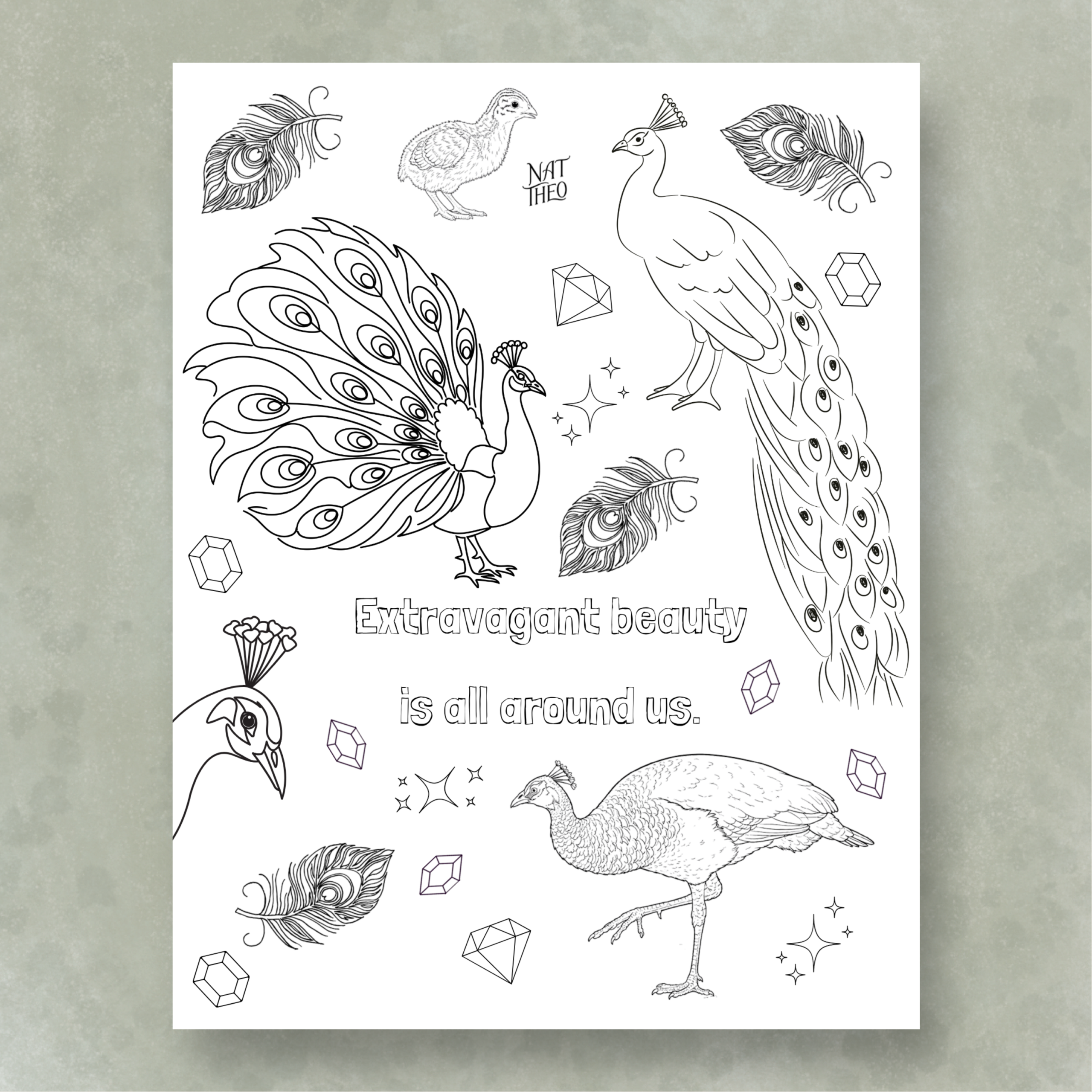
Why is a Peacock So Fancy Coloring Sheet
Why is a Peacock So Fancy?
Have you ever seen a peacock and wondered why it is dressed so extravagantly? With its brilliant colors, shimmering feathers, and enormous fan-like display, the peacock stands out from nearly every other bird.
But what makes a peacock so fancy?
The answer begins with understanding what a peacock actually is.
What Kind of Bird Is a Peacock?
A peacock is the male of a bird called a peafowl. The female is called a peahen, and their babies are called peachicks. Peafowl belong to a large group of mostly ground-dwelling birds called Galliformes, which also includes chickens, turkeys, pheasants, quail, and grouse.
Peafowl are native to parts of Asia and Africa, although they can now be found in many places around the world. While they can fly short distances, they spend much of their time on the ground. What makes them especially memorable is the male peacock’s spectacular display of feathers.
Why Do Peacocks Shake Their Tails?
One of the most famous peacock behaviors is raising and shaking its enormous fan of feathers.
Interestingly, what many people call a peacock’s tail is actually made of long feathers called coverts that grow from its back. These feathers can reach around five feet long and are collectively called a train.
When a male peacock wants to attract a peahen, he raises his train and shakes it in a display known as train rattling. The movement causes the feathers to shimmer and creates a rustling sound that helps attract attention. Peacocks also produce very low-frequency sounds during these displays that humans cannot hear.
God designed peacocks with strong lower back muscles, a flexible spine, and supportive tail feathers that help them lift and shake their impressive train.
What Makes Peacock Feathers So Colorful?
The brilliant colors of a peacock come from a phenomenon called iridescence.
Iridescence is when something appears to change color or shimmer as light strikes it from different angles. Peacock feathers contain tiny crystal-like structures that interact with light, reflecting vivid blues, greens, and shimmering colors back to our eyes.
This effect is known as structural color. Rather than coming from flat pigments like paint or crayons, the colors result from tiny three-dimensional structures that change how light reflects.
Many peacock feathers also feature eye-like markings called ocelli. A male peacock may have between 100 and 175 of these striking eye spots. These markings can help attract females and may also help discourage predators.
Why Did God Make Peacocks So Beautiful?
A peacock’s beauty seems to go far beyond what is necessary. Its long train requires energy to grow and maintain, can make movement more difficult, and makes the bird easier to spot. Yet peacocks remain among the most beautiful birds in the world.
This is an example of extravagant beauty: beauty that goes beyond what is simply practical. The peacock reminds us that creation is filled with colors, patterns, songs, and wonders that invite us to delight in what God has made.
From shimmering feathers to dazzling eye spots, the peacock points us to a Creator who fills His world with beauty. Every flash of blue and green serves as a reminder that God did not simply make a functional world. He made a beautiful one.
Learn more about why is a peacock so fancy on our nature podcast for kids and families:
learn more
Raising kids stirs something deep in our souls — an innate knowing that our time is finite. Taking my kids outside in creation, I’m discovering how to stretch our time and pack it to the brim with meaning. God’s creativity provides the riches of resources for teaching the next generation who He is and how He loves us. Join our adventure and discover inspiration and resources for refusing rush, creating habits of rest, living intentionally, and making the most of this beautiful life!
I'm Eryn, Master Naturalist, Author, & Bible Teacher
Hey there!

Receive free inspirational resources for refusing rush, creating habits of rest, parenting with intentionality, and teaching our kids who God is through what He has made!
Inspired
Be


The Nature of Rest
What the Bible and Creation Teach Us About Sabbath Living
Now Available!
Order
X
Signed Copy
Add a Comment