
Can Hippos Swim?


If you saw a hippo spending most of its day in a river, you would probably assume it is an excellent swimmer. After all, hippos spend up to 16 hours each day in the water. But here’s a surprising fact: hippos cannot actually swim.
Instead of swimming like fish, hippos sink.
Hippos are extremely large and dense animals. Rather than floating and paddling through the water, they use their powerful legs to walk along the bottom of rivers and lakes. They can also push off the bottom and bounce back toward the surface when they need air. Watching a hippo move underwater can look almost graceful, even though it is walking rather than swimming.

Hippo Coloring Sheet
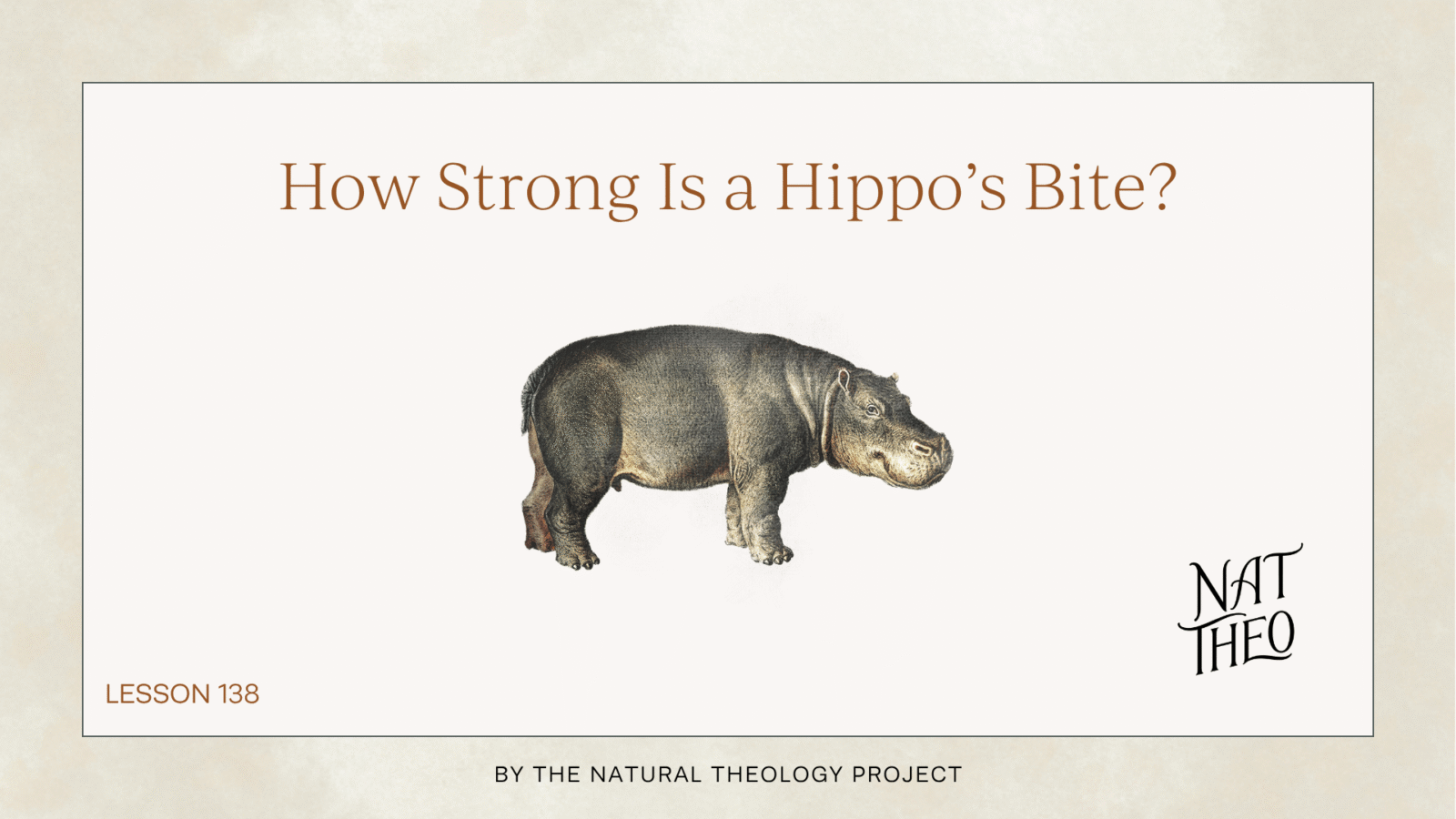
Why Do Hippos Spend So Much Time in Water?
Hippos live in freshwater habitats throughout Sub-Saharan Africa, including rivers and mangrove swamps. Africa can be very hot and dry, and hippos are sensitive to both sunburn and drying out. Because of this, they spend most of the day submerged in water.
Their name even reflects this lifestyle. The word hippopotamus means “river horse.” While they may not look much like horses, they certainly spend plenty of time in rivers.
As evening arrives and temperatures cool, hippos leave the water to forage for food. They can eat up to 100 pounds of grass in a day before returning to the water.
How Does God Help Hippos Live in Water?
Although hippos cannot swim, God designed them perfectly for life around water.
Their eyes, ears, and nostrils are positioned on the top of their heads. This allows them to remain mostly underwater while still being able to see, hear, and breathe.
Hippos can also hold their breath for around five minutes. They can even sleep in the water. God designed them to automatically surface for a breath without fully waking up.
These features help hippos stay cool and protected during the hottest parts of the day.
What Types of Hippos Are There?
There are two species of hippos.
The common river hippo is the massive animal most people picture when they think of a hippopotamus. Females can weigh around 3,000 pounds, while males can reach nearly 10,000 pounds. They live throughout much of Sub-Saharan Africa.
The pygmy hippopotamus is much smaller. It lives in swampy forests in a small region of West Africa and weighs far less than its larger relative. Even so, it remains an impressive animal.
A Wonderful Design for Life in the Water
Hippos may not swim like fish, but they are perfectly equipped for life in rivers and lakes. Their powerful legs allow them to walk along the bottom, their bodies help them stay cool in the water, and their specially positioned eyes, ears, and nostrils allow them to remain mostly submerged while still interacting with the world around them.
The next time you see a hippo floating in a river, remember it is not swimming; instead, it is using the unique design God gave it to walk, bounce, and thrive in its watery home.
Learn more about can hippos swim on our nature podcast for kids and families:
learn more
Raising kids stirs something deep in our souls — an innate knowing that our time is finite. Taking my kids outside in creation, I’m discovering how to stretch our time and pack it to the brim with meaning. God’s creativity provides the riches of resources for teaching the next generation who He is and how He loves us. Join our adventure and discover inspiration and resources for refusing rush, creating habits of rest, living intentionally, and making the most of this beautiful life!
I'm Eryn, Master Naturalist, Author, & Bible Teacher
Hey there!

Receive free inspirational resources for refusing rush, creating habits of rest, parenting with intentionality, and teaching our kids who God is through what He has made!
Inspired
Be


The Nature of Rest
What the Bible and Creation Teach Us About Sabbath Living
Now Available!
Order
X
Signed Copy
Add a Comment