
Can Dragonflies Fly Backward?


Yes, dragonflies can fly backward! A dragonfly has four flexible wings that can move somewhat independently. Special muscles let it control the angle, speed, and rotation of each wing, helping it hover, dart sideways, make sharp turns, and even fly backward.
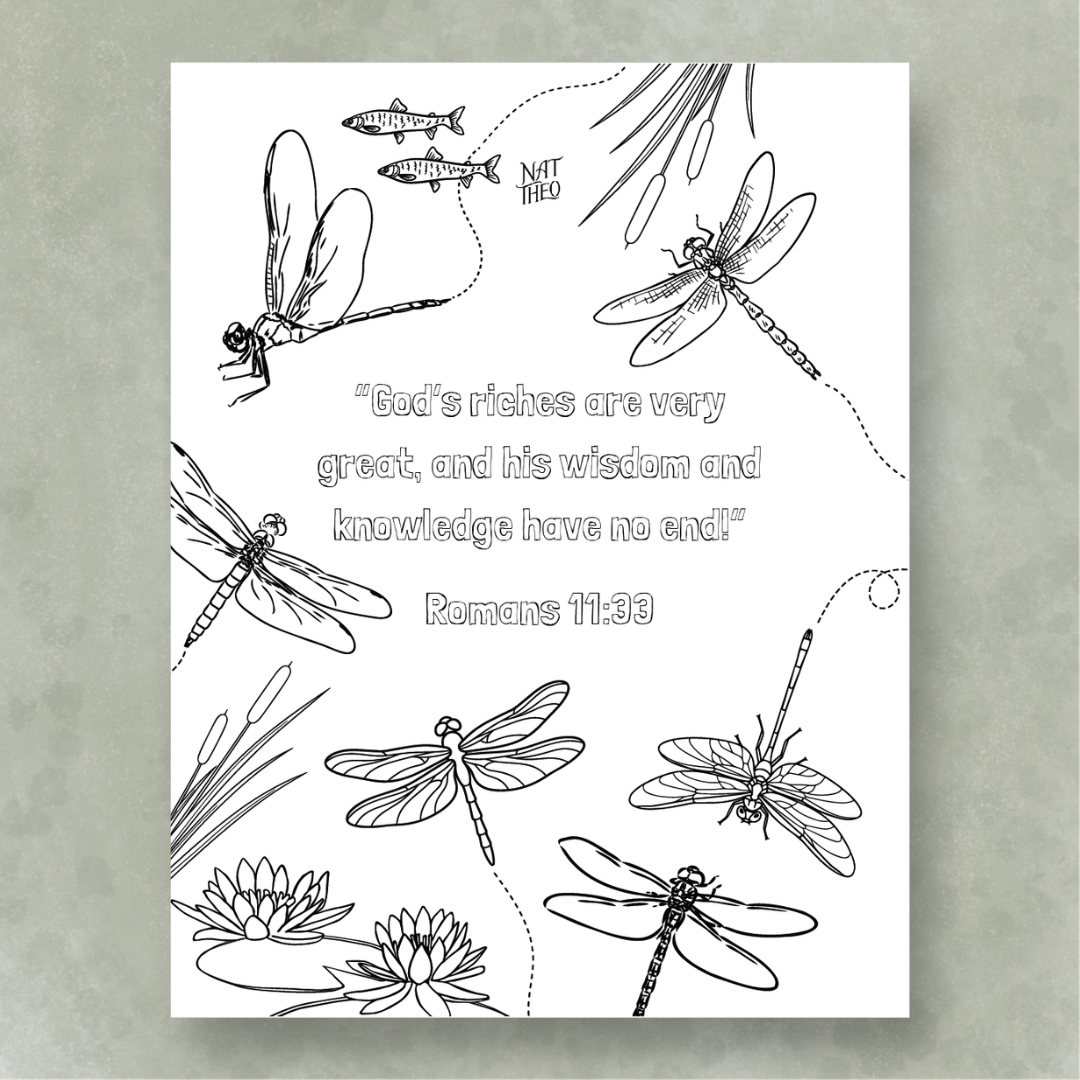
Dragonfly Coloring Sheet
How Can Dragonflies Fly Backward?
Dragonflies are incredible stunt flyers. They have four wings, with the front pair called forewings and the back pair called hindwings.
Each of those four wings can operate on its own. Every wing is attached to its own direct flight muscle, a muscle that moves just that wing.
These special muscles allow a dragonfly to change the angle, speed, and rotation of each wing. Unlike the wings of an airplane, which mostly stay fixed in one position, a dragonfly’s wings are flexible and independent.
That design lets a dragonfly hover, dart sideways, make sharp turns, and fly backward.
How Do Dragonfly Wings Work?
A dragonfly’s wings do much more than flap. They are covered in tiny sensors that send important information to the dragonfly’s brain.
If air pressure changes slightly, the wing sensors send real-time information to the brain. The brain can then send instructions back to the direct flight muscles, allowing each wing to adjust as needed.
All of this happens while a dragonfly zips through the air. Its wings can flap around 1,600 times every minute!
How Do Dragonflies Stay in the Air?
Dragonflies also create tiny swirls of air with their wings.
As a dragonfly flaps, the front edge of each wing slices through the air and causes it to swirl. This creates a tiny spiral, almost like an invisible tornado. The swirling air creates lower pressure above the wing, helping pull the dragonfly upward and giving it extra lift.
This swirling air is called a leading-edge vortex.
Because a dragonfly’s front and back wings can move together or somewhat independently, it can control these swirls of air in amazing ways. This helps it hover, make sharp turns, dart sideways, and fly backward.
Why Are Dragonflies Such Amazing Flyers?
A dragonfly’s flight works together with its incredible eyesight.
A dragonfly can have up to 30,000 tiny lenses in each of its two compound eyes. Its brain can process around 200 images every second. This helps the dragonfly rapidly spot and chase insects through the air.
Dragonflies have a 97 percent hunting success rate. They use their amazing sight and flight abilities to chase insects and sometimes use their six legs like a net to catch prey in midair.
What Can Dragonflies Teach Us About God’s Engineering?
From four independently controlled wings to tiny sensors and incredible eyes, a dragonfly displays amazing engineering.
Psalm 104:24 says, “How many are your works, Lord! In wisdom you made them all; the earth is full of your creatures.”
The next time you see a dragonfly hovering, turning, or even flying backward, take a moment to marvel at the wisdom God displayed in this incredible flying creature.
Learn more about dragonflies on our nature podcast for kids and families:
learn more
Raising kids stirs something deep in our souls — an innate knowing that our time is finite. Taking my kids outside in creation, I’m discovering how to stretch our time and pack it to the brim with meaning. God’s creativity provides the riches of resources for teaching the next generation who He is and how He loves us. Join our adventure and discover inspiration and resources for refusing rush, creating habits of rest, living intentionally, and making the most of this beautiful life!
I'm Eryn, Master Naturalist, Author, & Bible Teacher
Hey there!

Receive free inspirational resources for refusing rush, creating habits of rest, parenting with intentionality, and teaching our kids who God is through what He has made!
Inspired
Be


The Nature of Rest
What the Bible and Creation Teach Us About Sabbath Living
Now Available!
Order
X
Signed Copy
Add a Comment