
Why Do Skunks Spray?


Skunks spray to defend themselves from predators. When a skunk feels threatened by an animal such as a dog or a human, it can release a strong-smelling liquid from two scent glands near the base of its tail. The unpleasant smell helps deter the predator and encourages it to leave the skunk alone.
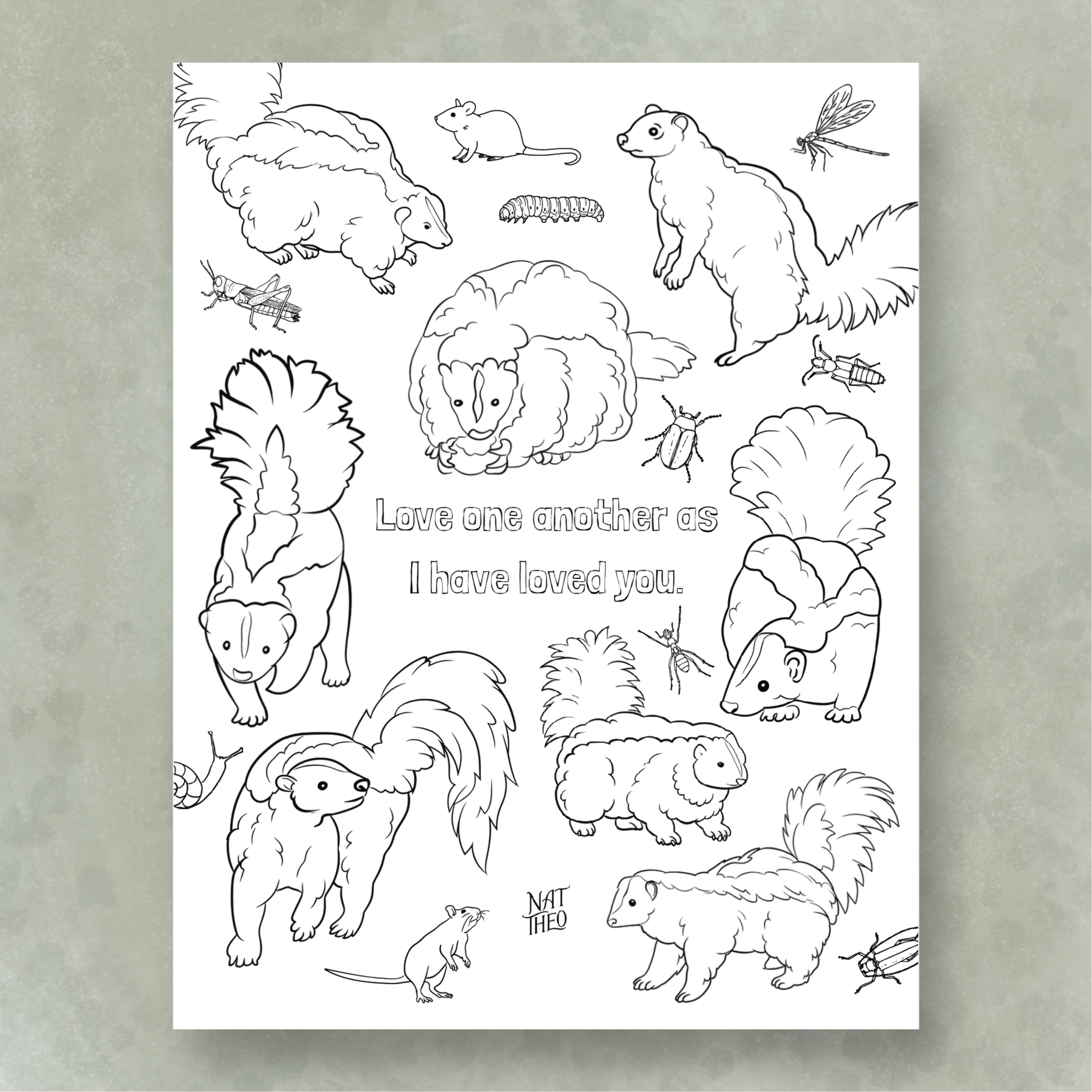
Skunk Coloring Sheet
Why Do Skunks Spray Their Stinky Smell?
A skunk is not always smelly. Its beautiful coat of fur does not carry the strong odor we associate with skunks. Instead, a skunk smells bad when it chooses to spray.
Skunks have two scent glands located near the base of their tails. A gland is a part of the body that produces and releases something the body needs or uses. A skunk’s scent glands make and store the strong-smelling liquid it uses for defense.
When a predator gets too close, a skunk can spray this liquid around 10 feet, or 3 meters. It can even use its muscles to aim the spray toward its target!
Why Does Skunk Spray Smell So Bad?
One ingredient in skunk spray is a chemical compound called a thiol. A thiol contains hydrogen and sulfur.
Sulfur is a naturally occurring element found in rocks, soil, living things, and many chemicals. By itself, sulfur is not necessarily stinky. But when it combines with other things, it can create strong smells, including rotten eggs and skunk spray.
Skunk spray is also oily, which helps it stick to a pet’s fur or a human’s skin. Because oil repels water, simply trying to wash skunk spray away with water does not work very well.
Do Skunks Spray Every Time They Feel Threatened?
Skunks do not spray just for fun. Their supply of smelly liquid can run out, and it can take around 10 to 14 days for their scent glands to refill.
That means skunks need to use their spray carefully.
Before spraying, a skunk will often give other warnings. For example, it might stamp its feet as if to tell a predator, “Get away soon or I’ll spray you!”
Even baby skunks are born with scent glands. At a couple of weeks old, they can begin releasing a little smell, although their aim is not very good yet. As they grow, they become better at spraying accurately.
Why Did God Make Skunks?
A skunk’s spray is only one part of this fascinating animal’s design. Skunks also play an important role in pest control.
They eat insects that can destroy farmers’ crops, including grasshoppers, grubs, caterpillars, and beetles. They also eat mice. This makes skunks a biological control, which is a living thing that helps reduce another living thing that could cause problems.
Rather than only thinking of skunks as stinky animals, we can look closer and see their beautiful coats, amazing defenses, and important role in creation.
As 1 Samuel 16:7 reminds us, people look at the outside, “but the Lord looks at the heart.”
The next time you think about a skunk’s smelly spray, remember to look beyond the stink and marvel at the purpose God gave this unique creature.
Learn more about skunks on our nature podcast for kids and families:
learn more
Raising kids stirs something deep in our souls — an innate knowing that our time is finite. Taking my kids outside in creation, I’m discovering how to stretch our time and pack it to the brim with meaning. God’s creativity provides the riches of resources for teaching the next generation who He is and how He loves us. Join our adventure and discover inspiration and resources for refusing rush, creating habits of rest, living intentionally, and making the most of this beautiful life!
I'm Eryn, Master Naturalist, Author, & Bible Teacher
Hey there!

Receive free inspirational resources for refusing rush, creating habits of rest, parenting with intentionality, and teaching our kids who God is through what He has made!
Inspired
Be


The Nature of Rest
What the Bible and Creation Teach Us About Sabbath Living
Now Available!
Order
X
Signed Copy
Add a Comment