
Why Do Mushrooms Appear After Rain?


Mushrooms appear after rain because rainfall triggers underground fungal networks to grow mushrooms. Rain soaks into fungal cells, causing them to expand quickly, while also softening the soil so mushrooms can push through more easily. A mushroom can grow within hours after rainfall.
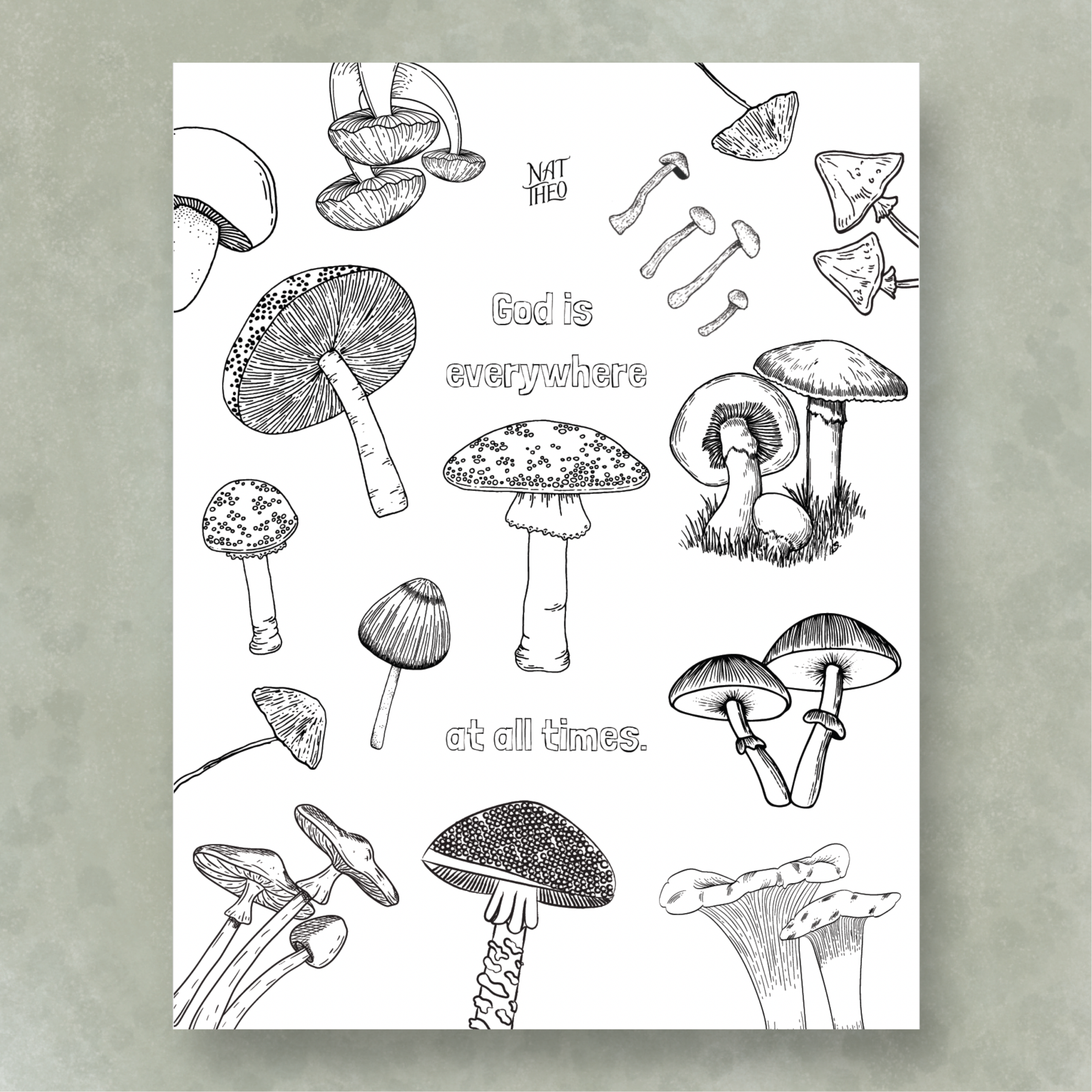
Mushroom Coloring Sheet
Why Do Mushrooms Grow After It Rains?
Have you ever stepped outside after a rainfall and suddenly noticed mushrooms popping up from the ground? They might seem to appear like magic, but there is actually much more happening beneath your feet.
Mushrooms are not plants. They belong to a different category of living things called fungi. Fungi include mushrooms, molds, and yeasts.
There is also much more to a mushroom than what we see above ground.
Beneath the soil, tiny fungal threads called hyphae grow and spread. Many hyphae together form a mycelial network, which is a web of fungal threads that grows through soil, wood, or other material and absorbs nutrients.
This underground fungal network has been growing out of sight before the mushroom ever appears.
How Does Rain Help Mushrooms Grow?
When rain falls, it soaks into the ground where the mycelial network is growing. Rainfall is the secret ingredient the fungus needs to grow a mushroom.
Hyphae are made of cells, the tiny building blocks of living things. These cells can fill with water and become bigger, almost like a water balloon.
When rain soaks into the hyphal cells, they absorb water and expand quickly. As the cells grow, they can form a mushroom within hours.
Rain also softens the soil, making it easier for the mushroom to push up through the dirt.
In this way, rainfall acts almost like a trigger or switch, telling the underground fungal network that it is time to grow a mushroom.
Where Do Mushrooms Come From?
When you see a mushroom after rain, remember that it did not suddenly appear from nowhere. It is connected to the larger mycelial network beneath the ground.
A mushroom is the fruiting body of a fungus. Its purpose is to help make more fungi.
Instead of producing seeds like plants, mushrooms produce spores. Spores are tiny reproductive cells that mushrooms release to grow new fungi.
If a spore lands in the soil and conditions are right, a new fungal network can begin. A single hypha can grow from the spore, eventually developing into a larger mycelial network. After rain, that network can produce its own mushrooms.
What Can Mushrooms Teach Us About God?
Seeing mushrooms appear after rain can remind us that much more is happening beneath the soil than we realize. Fungi grow beneath our feet, on fallen logs, tree stumps, and in many other places around us.
While fungi are plentiful, only God is truly omnipresent, meaning He is everywhere at all times.
Psalm 139:7 asks, “Where can I go to get away from your Spirit? Where can I run from you?”
The next time you discover mushrooms popping up after rainfall, remember the incredible fungal network hidden beneath your feet. And let it remind you that God is at work in the details of our lives, even behind the scenes. He is everywhere at all times.
Learn more about mushrooms on our nature podcast for kids and families:
learn more
Raising kids stirs something deep in our souls — an innate knowing that our time is finite. Taking my kids outside in creation, I’m discovering how to stretch our time and pack it to the brim with meaning. God’s creativity provides the riches of resources for teaching the next generation who He is and how He loves us. Join our adventure and discover inspiration and resources for refusing rush, creating habits of rest, living intentionally, and making the most of this beautiful life!
I'm Eryn, Master Naturalist, Author, & Bible Teacher
Hey there!

Receive free inspirational resources for refusing rush, creating habits of rest, parenting with intentionality, and teaching our kids who God is through what He has made!
Inspired
Be


The Nature of Rest
What the Bible and Creation Teach Us About Sabbath Living
Now Available!
Order
X
Signed Copy
Add a Comment