
Is an Inchworm a Worm or a Caterpillar?



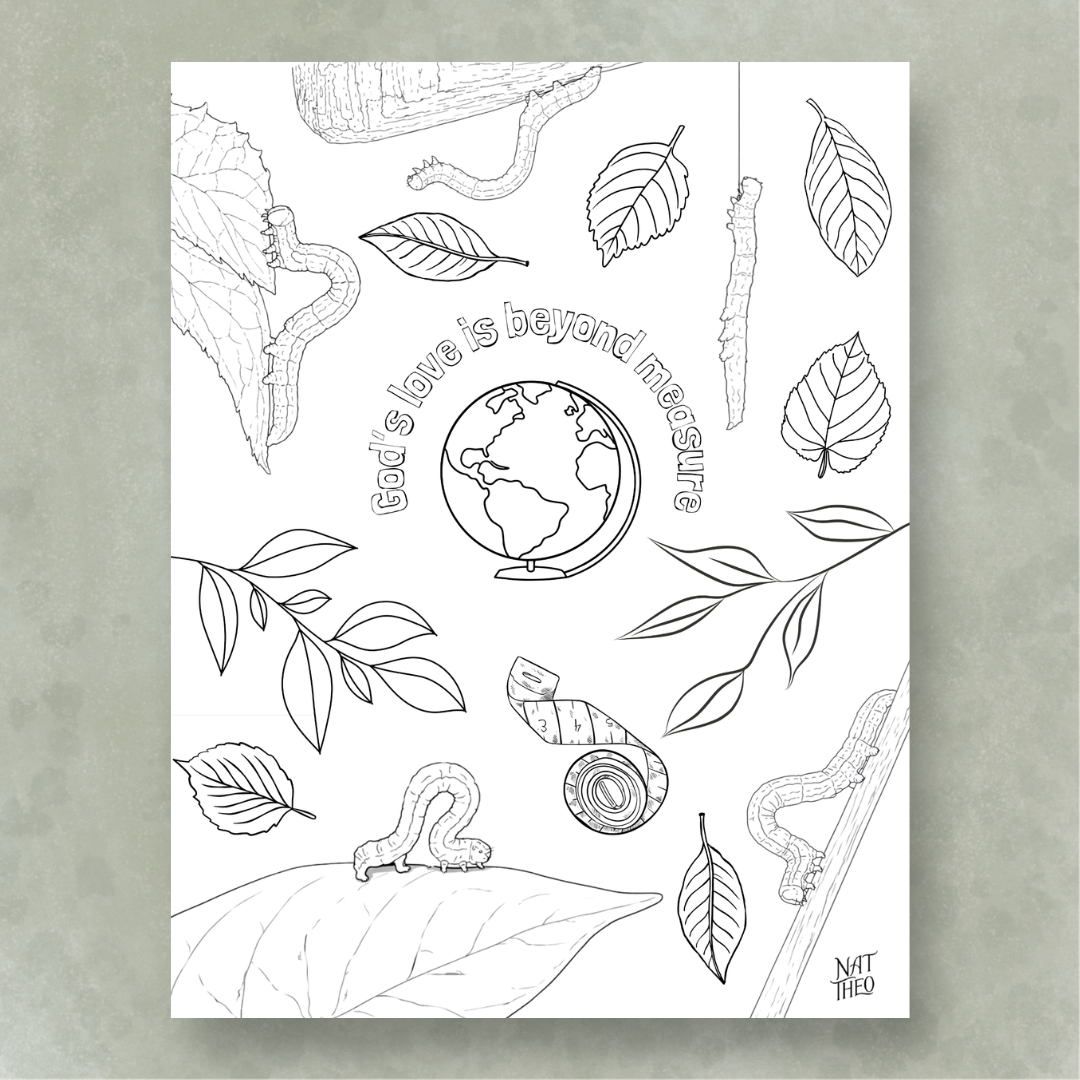
Inchworm Coloring Sheet
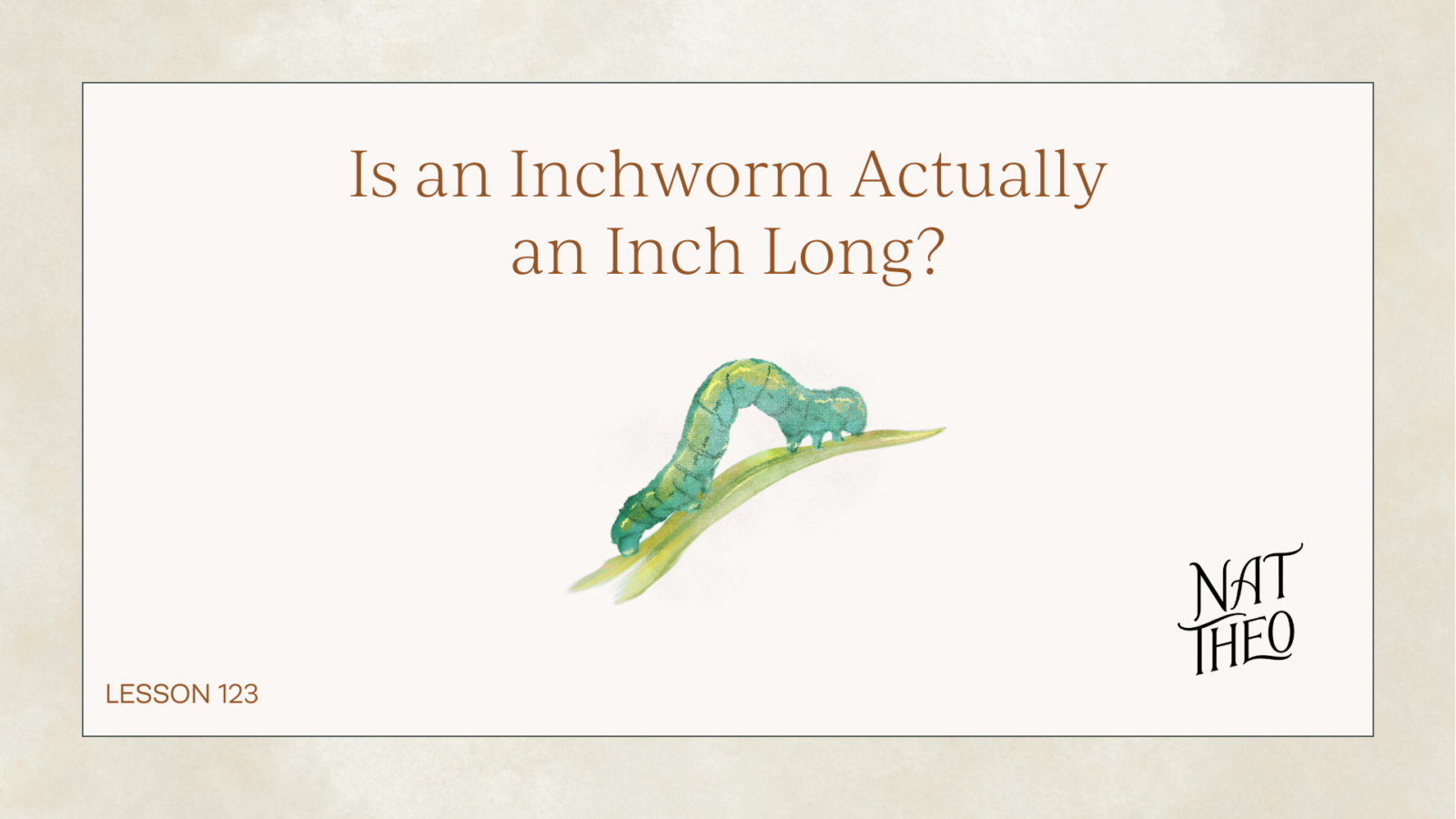
Is an Inchworm a Worm or a Caterpillar?
If you’ve ever spotted a tiny green creature inching along a branch or dangling from a thread, you’ve likely seen an inchworm. At first glance, it might look like a worm. But is an inchworm actually a worm?
Let’s take a closer look at what an inchworm really is and how God designed this fascinating little creature.
Is an Inchworm a Worm or a Caterpillar?
An inchworm is not a worm at all. It is actually a caterpillar.
Many inchworms have bright green bodies and a shape that makes them look similar to worms. But they belong to a group of caterpillars in a family called Geometridae. There are thousands of different kinds in this group, and each one grows into a type of geometer moth.
The name “inchworm” is simply a nickname. It refers to caterpillars that move in a very unique way, inching along branches and leaves.
These caterpillars live in many places around the world and can be found on every continent except Antarctica.
Why Are Inchworms Called “Earth Measurers”?
Inchworms are sometimes called loopers, spanners, or even “earth measurers.” These names come from how they move.
Instead of crawling smoothly like other caterpillars, inchworms bunch their bodies into a loop, then stretch forward again. This motion makes them look as if they are measuring the ground, almost like a moving tape measure.
Their scientific name, Geometridae, comes from Greek words that mean “to measure the earth.”
How Do Inchworms Move Differently Than Other Caterpillars?
The inchworm’s unique movement comes from how its body is designed.
Most caterpillars have six true legs at the front of their bodies and additional stub-like structures called prolegs along the middle and back. These help them move in a smooth crawling motion.
Inchworms are different. They still have six true legs at the front and prolegs at the back, but they do not have prolegs in the middle of their bodies.
Because of this, they must pull their back end forward to form a loop, then stretch out again. This repeated motion creates their signature “inching” movement.
Why Do Inchworms Hang From Trees?
You might have seen an inchworm dangling from a thin, nearly invisible thread. This thread is made of silk.
Inchworms use silk for safety. If they sense danger, like a bird nearby, they can quickly lower themselves off a branch and hang out of reach until it is safe to return.
They also use silk when it is time to grow into a moth. They lower themselves to the ground and create a cocoon in soil or leaf litter.
This silk is made from a special organ called a spinneret. It produces a liquid that hardens into a thread when it touches the air.
What Can We Learn From Inchworms?
Even though inchworms are small and slow-moving, they remind us that there is always more to discover in God’s creation. Their careful movements and unique design show creativity and purpose.
Next time you see an inchworm inching along a branch or dangling in the air, you’ll know—inchworms are not a worm at all, but a carefully designed caterpillar, moving in its own remarkable way.
Learn more about inchworms on our nature podcast for kids and families:

learn more
Raising kids stirs something deep in our souls — an innate knowing that our time is finite. Taking my kids outside in creation, I’m discovering how to stretch our time and pack it to the brim with meaning. God’s creativity provides the riches of resources for teaching the next generation who He is and how He loves us. Join our adventure and discover inspiration and resources for refusing rush, creating habits of rest, living intentionally, and making the most of this beautiful life!
I'm Eryn, Master Naturalist, Author, & Bible Teacher
Hey there!

Receive free inspirational resources for refusing rush, creating habits of rest, parenting with intentionality, and teaching our kids who God is through what He has made!
Inspired
Be


The Nature of Rest
What the Bible and Creation Teach Us About Sabbath Living
Now Available!
Order
X
Signed Copy
Add a Comment